

Tankless engineering reference
Tankless water heater GPM,
BTU & temperature rise.
A heater’s maximum flow rating does not describe every operating condition. Useful hot-water flow depends on how much heat reaches the water and how far its temperature must rise.
Tankless Water Heater GPM / BTU / Temperature Rise — V10
The relationship
For a steady-state reference using US gallons and °F:
Flow (US GPM) ≈ input (BTU/h) × efficiency ÷ [500 × temperature rise (°F)]
Temperature rise is outlet temperature minus inlet temperature. This is an engineering approximation; actual heater controls, hydraulic limits and manufacturer ratings still govern selection.
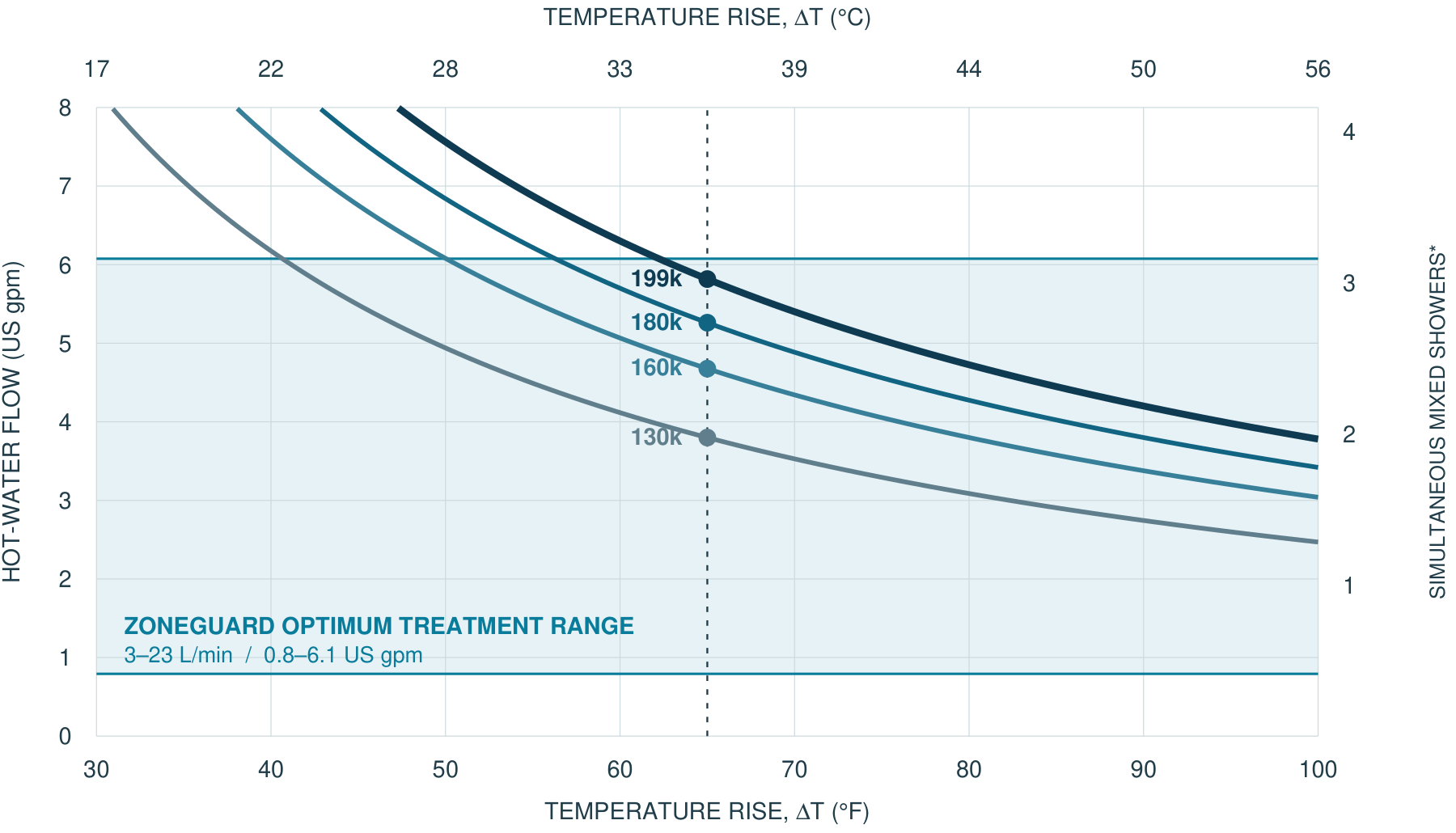
95% efficiency · 55°F inlet
120°F outlet; 65°F temperature rise.
| Input | US GPM | L/min |
|---|---|---|
| 130,000 BTU/h | 3.8 | 14.4 |
| 160,000 BTU/h | 4.7 | 17.7 |
| 180,000 BTU/h | 5.3 | 19.9 |
| 199,000 BTU/h | 5.8 | 22.0 |
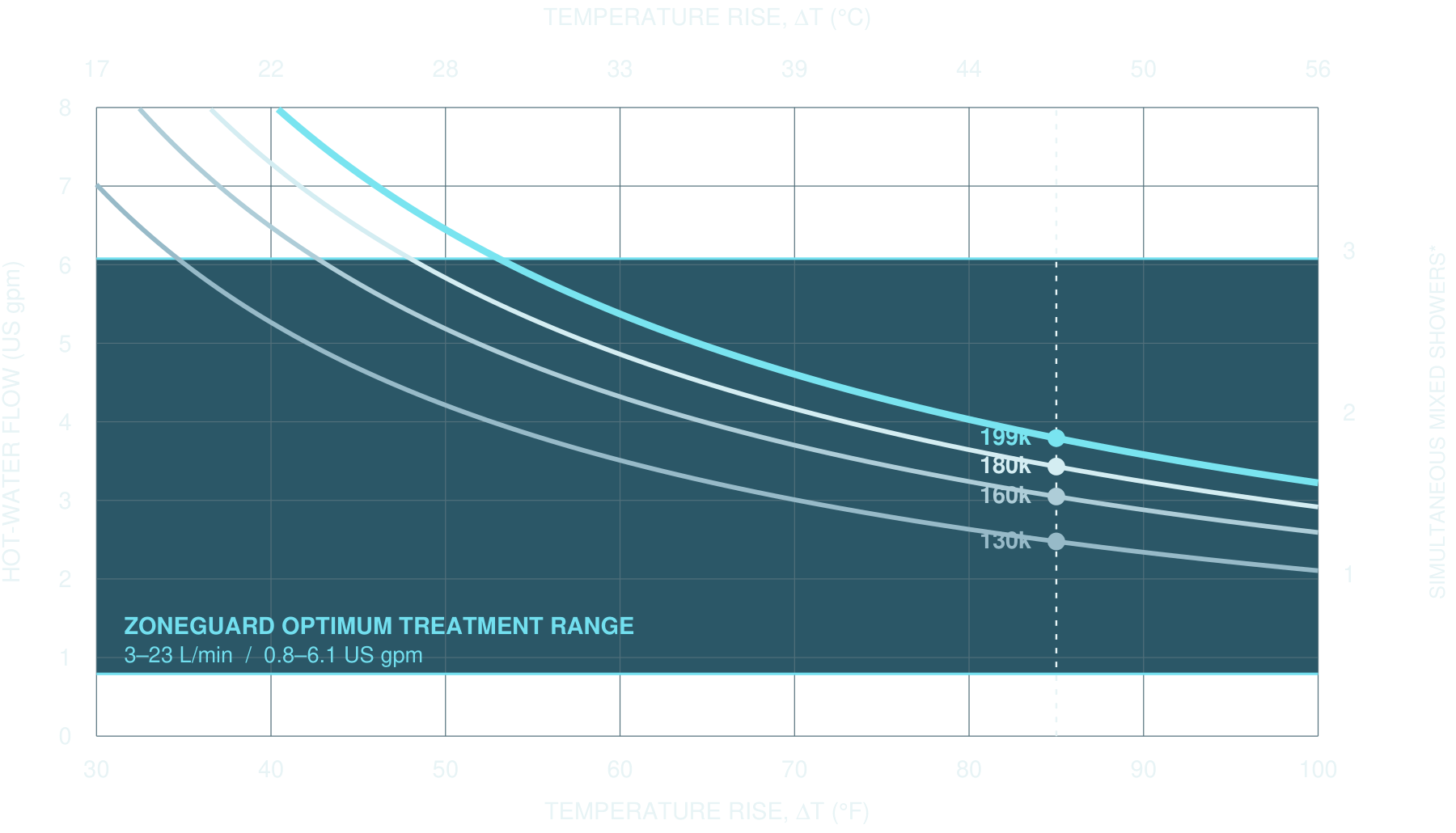
81% efficiency · 35°F inlet
120°F outlet; 85°F temperature rise.
| Input | US GPM | L/min |
|---|---|---|
| 130,000 BTU/h | 2.5 | 9.4 |
| 160,000 BTU/h | 3.0 | 11.5 |
| 180,000 BTU/h | 3.4 | 13.0 |
| 199,000 BTU/h | 3.8 | 14.4 |
Keep heater output and treatment range separate.
ZoneGuard Tankless’s optimum treatment range is 3–23 L/min, approximately 0.8–6.1 US GPM. These curves describe heater reference output, not scale-prevention efficacy tests or guarantees of delivered flow.
Mixed showers use both hot and cold water.
At 2.5 US GPM mixed to 105°F from a 120°F hot supply, a 55°F cold supply requires about 1.92 US GPM of hot water per shower. At a 35°F cold supply, the hot-water component becomes about 2.06 US GPM. Do not count heater flow a second time when calculating the same household demand.
Actual performance varies by heater model, water conditions and installation. Use manufacturer data and qualified sizing advice.
Explore ZoneGuard Tankless